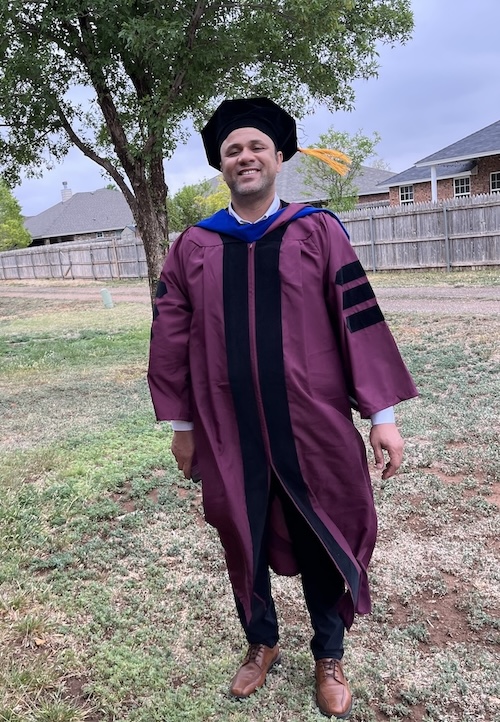
Essa Imhmed, Ph.D.
Assistant Professor, Computer Science
Syllabus: CS 401 - Introduction to Compilers
Course Description:
This course introduces fundamental concepts and techniques in designing and implementing compilers. It covers finite automata, regular expressions, context-free grammars, lexical analysis, parsing, and the construction of compiler components. Students will gain practical experience by working on a term project in C/C++ programming, which involves creating the various components of a compiler.
Prerequisites:
At least C in CS/EET 122, CS 301
Textbook:
Compilers: Principles, Techniques, and Tools (2nd Edition), Aho, Lam, Sethi, Ullman. ISBN-10 : 0321486811, ISBN-13 : 9780321486813, Addison Wesley
Course Learning Objectives:
- Understand the theoretical concepts of regular languages, context-free languages, regular expressions, context-free grammars, and formal language hierarchy.
- Use Thompson's construction to convert from regular expressions to NFA and apply subset construction to convert from NFA to DFA.
- Implement recursive descent parsing for a small grammar.
- Understand LL and LR parsing techniques for context-free languages.
- Use table-driven top-down (LL(1)) and bottom-up (SLR) parsing methods to parse context-free languages.
- Apply the concepts of scanning, parsing, symbol table management, abstract syntax tree representation, and code generation in the construction of a compiler.
- Apply relevant tools (e.g., lex, yacc, flex, bison, and make) to develop a medium-sized C/C++ project.
Course Topics:
- Introduction to Compilers: The Structure of a Compiler
- Lexical analysis:
- Regular expressions
- Finite-state automata (deterministic and non- deterministic)
- Regular expressions from/to finite-state automata conversion
- String matching
- Syntax Analysis:
- Context-free grammars (CFG)
- Parsing algorithms
- Abstract syntax trees (ASTs)
- CFGs classes
Course Grading
| Project | 60% |
| Labs/Quizzes/Homeworks | 15% |
| Exams | 25% |